An in-vehicle experience for electrifying adventures
Lead Product Designer · Conceptual
Redesigned the Ford Explorer infotainment experience from a hardware-organized control model to a unified, customer-first launcher — consolidating climate, media, navigation, and radio into one surface with ≤2-tap access to all primary controls. Extended key flows to a mobile companion for pre-trip setup. Led the core experience framework and cross-functional alignment across engineering, safety, and digital design.
Scope
0→1 concept
Platform
In-vehicle + mobile
Team
Cross-functional
Constraint
Safety-critical UX
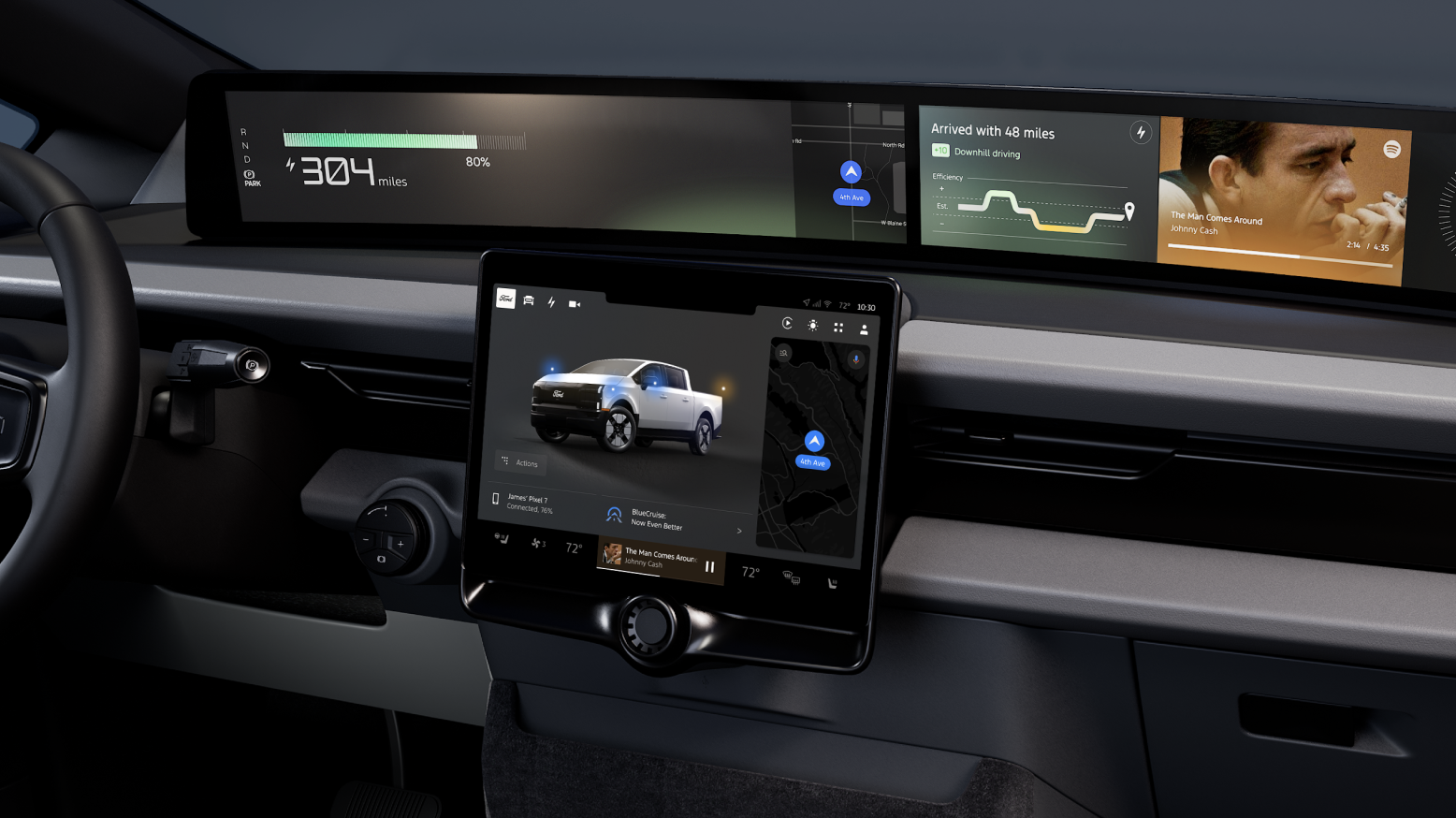
Ford Explorer® SUV
Reimagining the in-vehicle & mobile experience
In-vehicle Experience Overview
Background & Business Problem
Feature-first design was getting in the driver's way
The existing Explorer infotainment system organized controls around hardware taxonomy — climate lived in one place, media in another, navigation elsewhere. Everyday tasks required multiple taps across disconnected surfaces, pulling driver attention away from the road. The core question:
How might we shift from a control-focused model to one organized around what a driver actually needs?
Approach|
Unified launcher with a context-first structure
1 - Reframed the problem
Shifted focus from feature organization to "what does the driver need in the next 10 seconds?" — a time-action model rather than a category model.
2 - Designed a unified launcher
A persistent dock for the 5 highest-frequency actions (climate, media, navigation, phone, home) with contextual cards for deeper tasks — all reachable in ≤2 taps.
Mobile as pre-trip, not remote control
3 - Extended key flows to mobile
Adapted pre-trip setup (destination, climate presets, media queue) to a companion mobile surface — so drivers configure before they sit down.
4 - Multidisciplinary Sync
Worked with cross-functional teams spanning digital design, engineering, and safety to align the concept framework — ensuring the experience vision was grounded in real platform constraints.
What I Drove
Reframed the design problem around time-to-action rather than feature taxonomy. Defined the core interaction model — a persistent launcher with ≤2-tap access to all primary controls. Resolved key tradeoffs: single consistent UI over mode-split, fixed controls over adaptive layouts, mobile as pre-trip setup rather than remote control.
FORD Multi-Modal Controller
FORD MMC 2.0 - Lead Product Designer
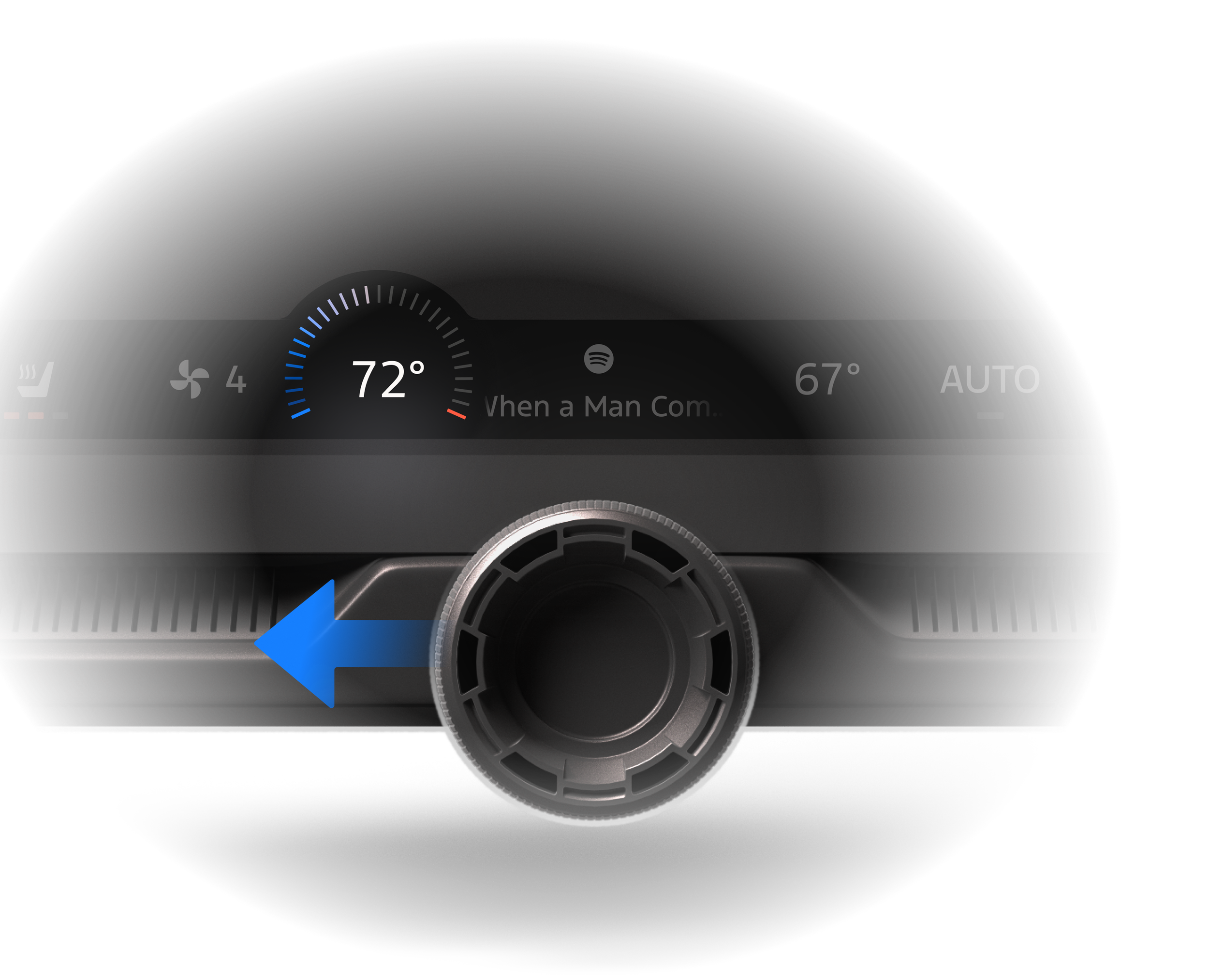
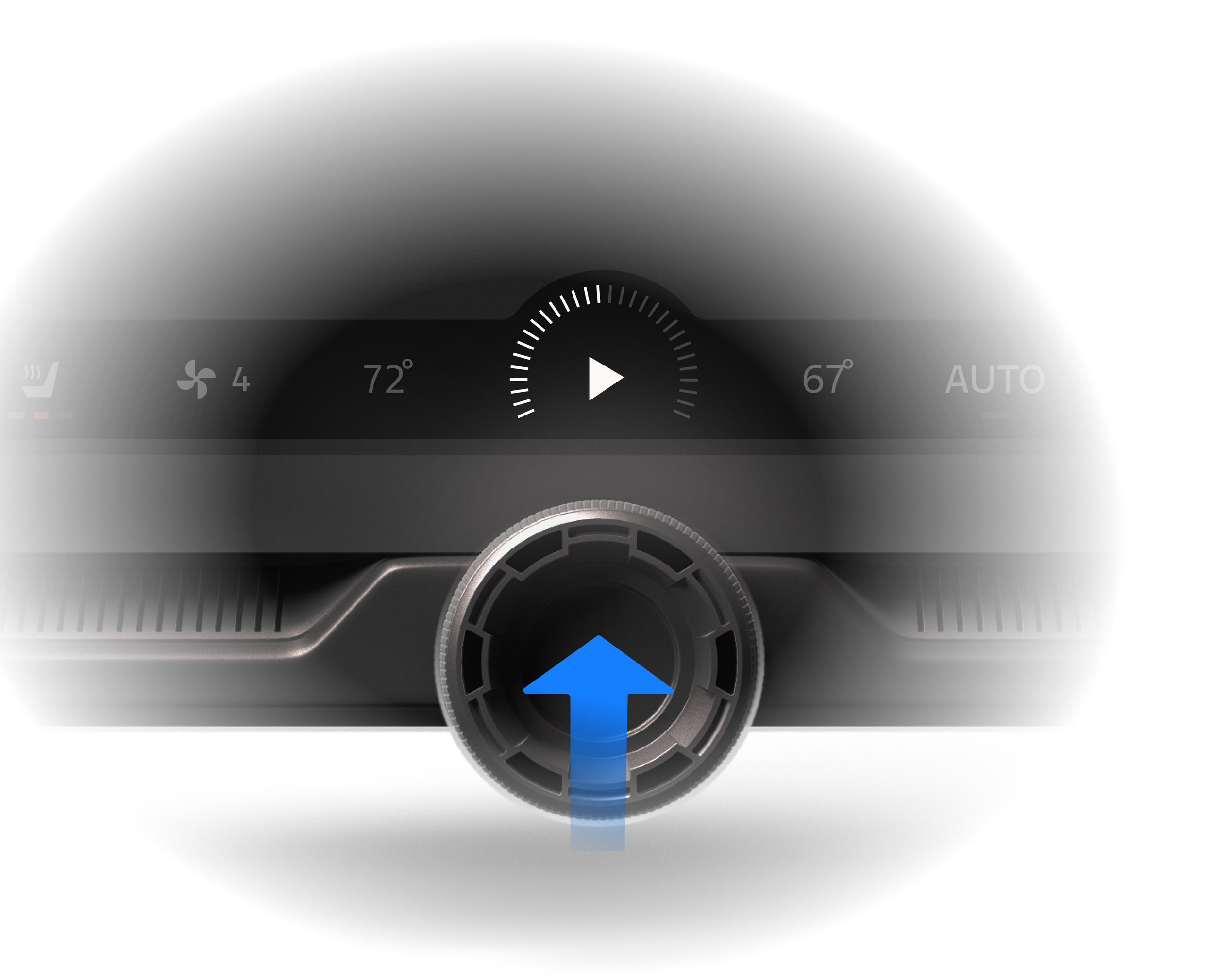
The Multi-Modal Controller brings physical interaction into the digital realm, offering a simplified, intuitive interface that mirrors the hardware layout while supporting quick, glanceable navigation
Scope
0→1 concept
Platform
In-vehicle
Team
Cross-functional
Constraint
Safety-critical UX
MMC Overview
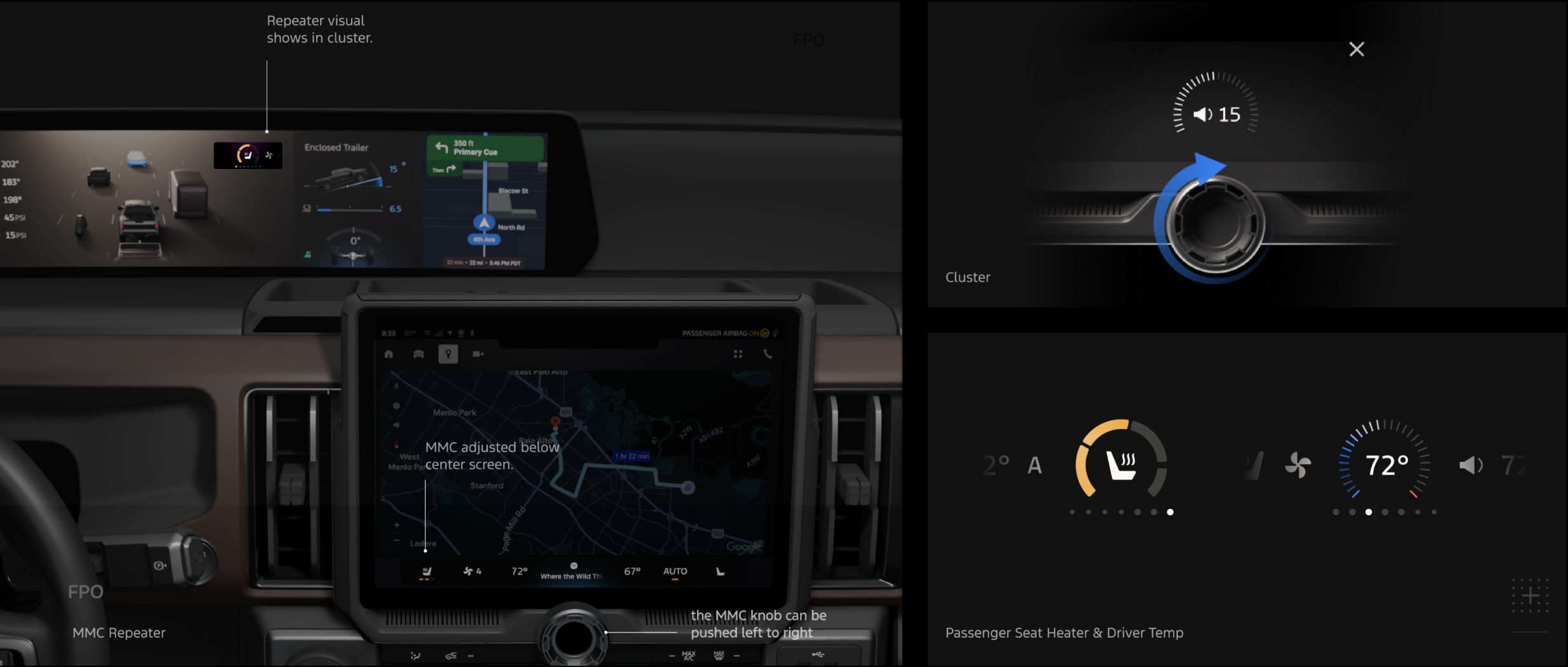
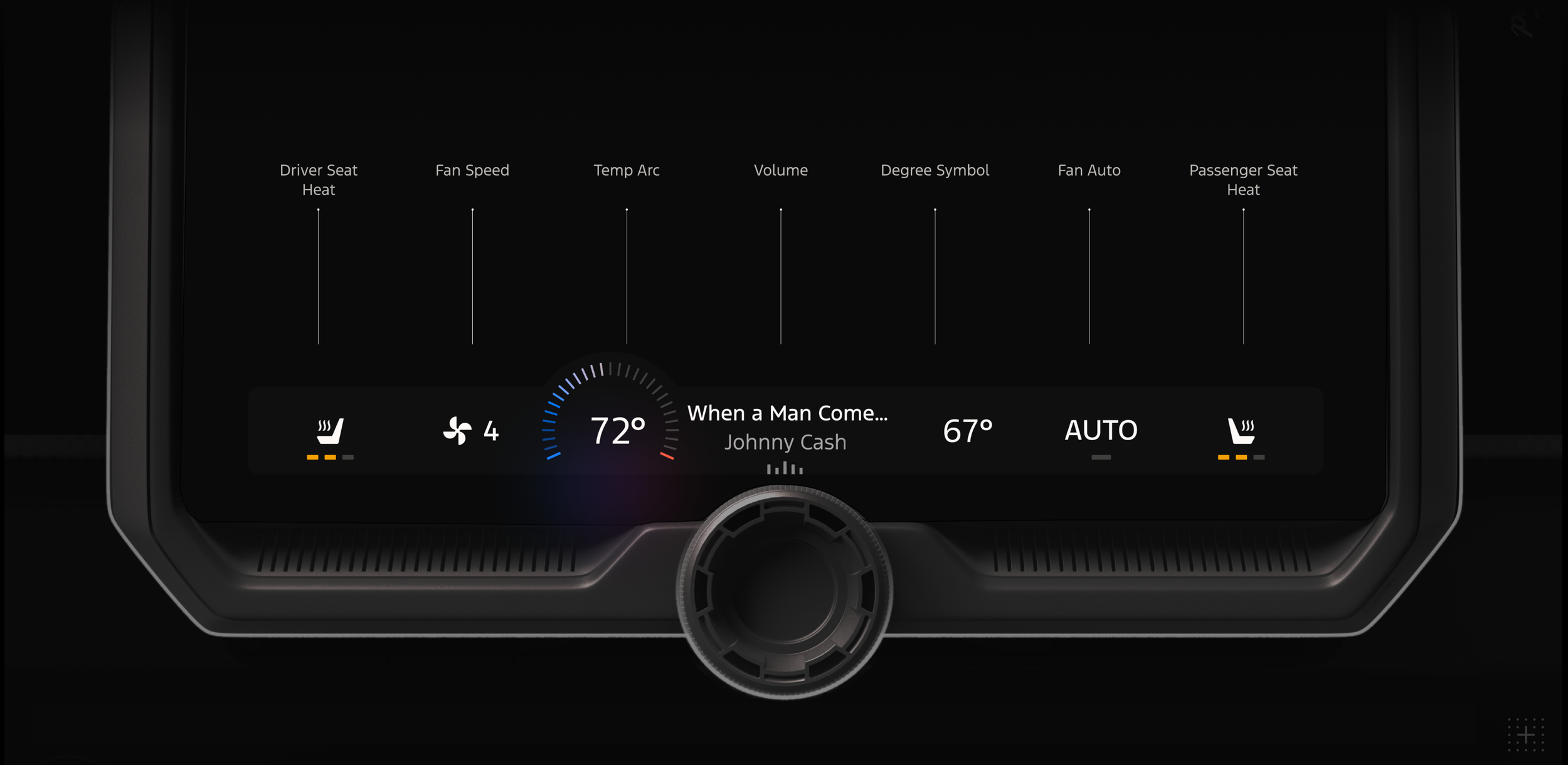
HMI - Climate and Media Bar Anatomy
MMC Behavior
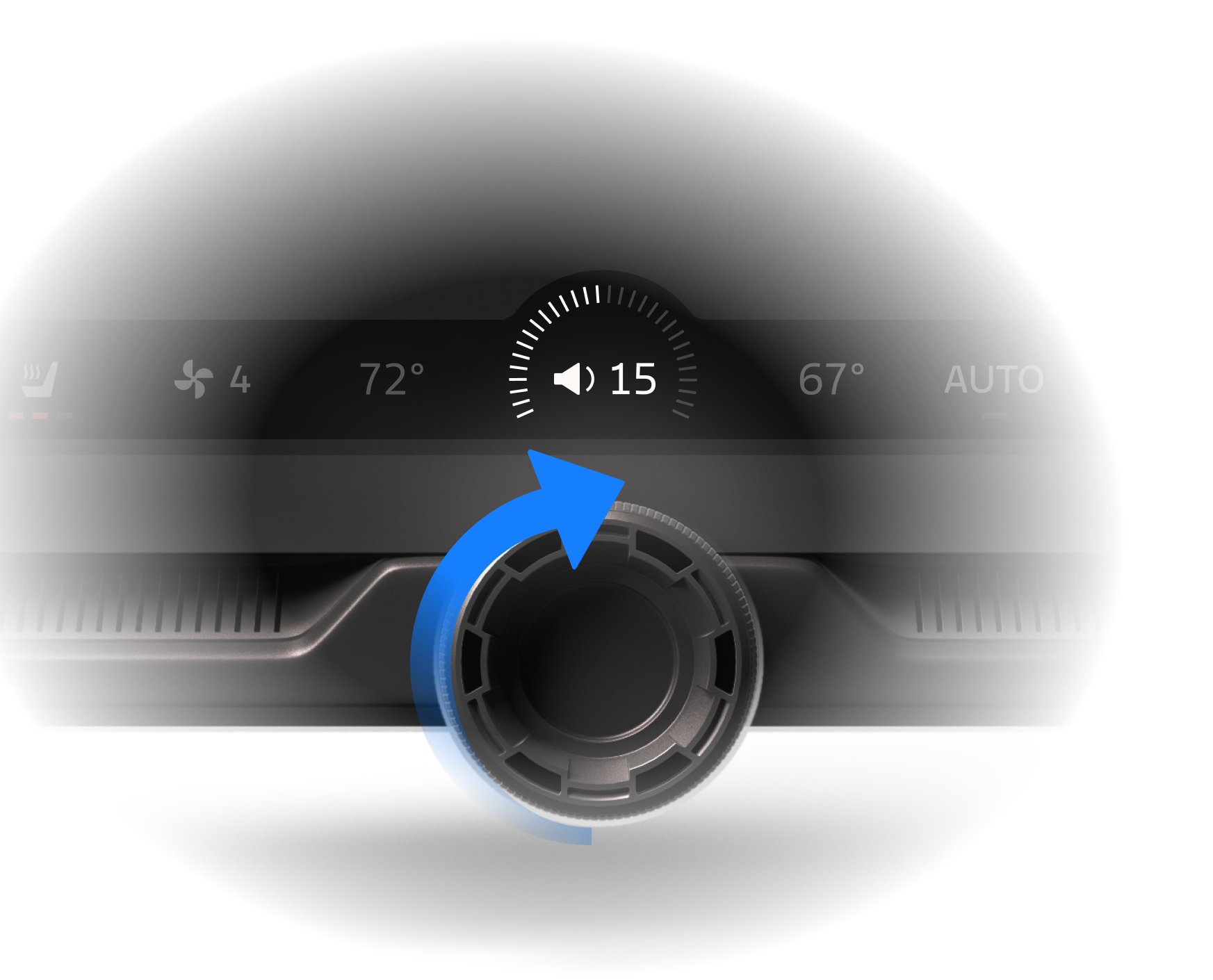
Physical Interactions
Press to Play/Pause Audio
Ex: Audio
Rotate to increase/decrease volume
Ex: Volume